How to Grow Dahlias in the UK: From Tubers to Spectacular Summer Flowers
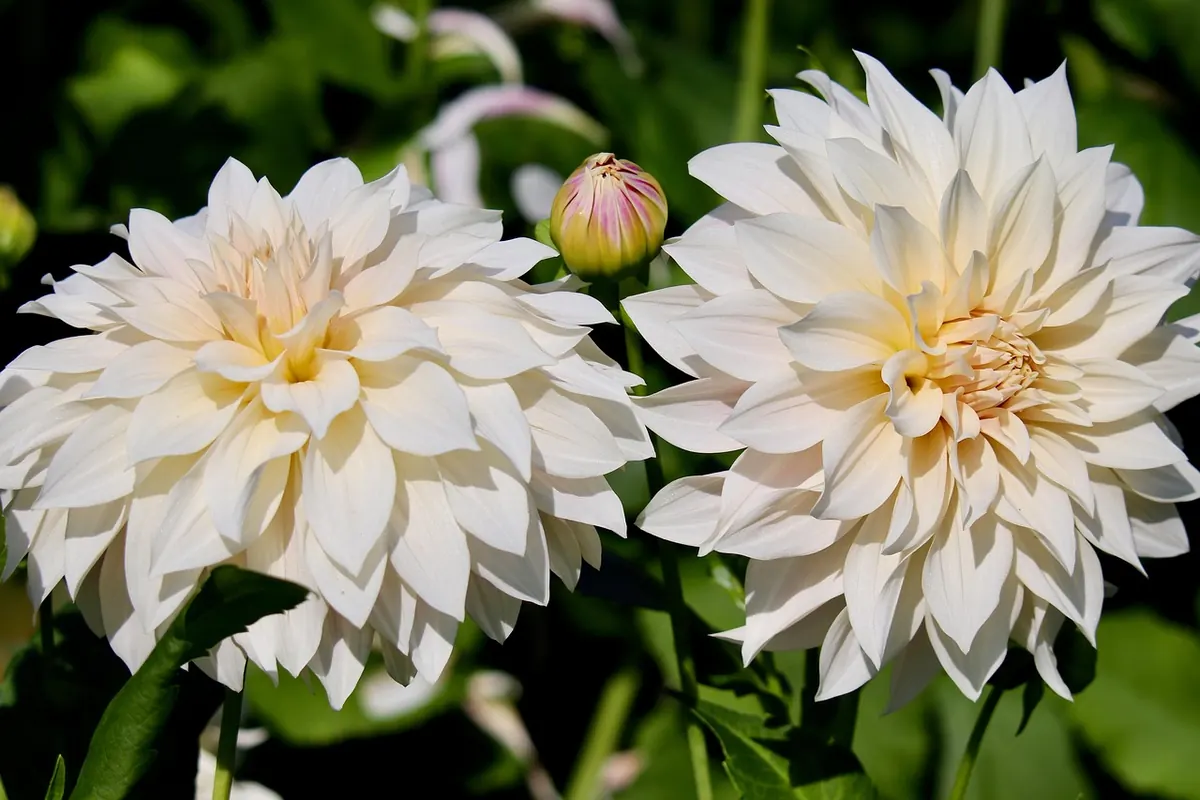
Dahlias flower from midsummer right through to the first hard frost, and the more you cut them, the more they produce. That alone makes them worth the space. They are tender perennials, though, which means the British winter will finish off a tuber left in cold, wet ground in most parts of the country. Get a few basics right — planting time, support, water, deadheading and lifting — and you will have buckets of flowers from August until October.
Choosing dahlias that suit your space
Before you buy, think about where the plants will go. Decorative and cactus dahlias are the tall exhibition types, often reaching 1.2m or more, and they need serious staking. Pompon and waterlily types sit in the middle. Dwarf bedding dahlias stay around 30–45cm and are happy in pots, window boxes and the front of a border. If bees and butterflies matter to you, choose single-flowered varieties with open centres — the tightly double types are largely closed to pollinators.
Tubers arrive in spring, either bare or in bags of dry compost. Look for firm, plump tubers with at least one visible eye — the small pale shoot, much like a potato eye — because a tuber without one will never grow. Rooted cuttings and seed-raised plants are also available and are useful if you want a lot of colour cheaply, though tubers give you the widest choice of named varieties.
Starting tubers: pots first, or straight in?
Potting up indoors in April
Starting tubers in pots gives you a head start and protects young shoots from slugs. Use a 2–3 litre pot of multipurpose compost, lay the tuber horizontally with the eye facing up, and cover it with 2–3cm of compost. Water lightly and keep it somewhere bright and frost-free at around 15–18°C. Shoots usually appear within two to four weeks. Water sparingly until then — a soggy tuber simply rots.
Planting straight into the ground
If you would rather skip the pots, wait until the risk of frost has passed, which in most of the UK means late May or early June. Choose a spot in full sun, sheltered from strong wind, and improve the soil with a few handfuls of garden compost. Plant the tuber 10–15cm deep, with the eye uppermost, and space tall varieties 45–60cm apart; dwarf types are fine at 30cm.
Staking, spacing and support
Put the support in at planting time. Hammering a cane in later is a good way to spear the tuber you have just coaxed into growth. One stout cane per plant works well for most varieties — tie the main stem in with soft twine as it grows, loosening the tie as the stem thickens. For a group of plants, a ring of canes with twine wound around them, or a frame of netting, is quicker and looks tidier than a forest of individual sticks.
Pinch out the growing tip when plants are about 30cm tall. This sounds brutal, but it prompts sideshoots and you end up with a bushier plant carrying far more flowers.
Skip the pinch if you are growing for the show bench and want a handful of very large blooms rather than a generous, continuous supply.
Watering, feeding and pests
Dahlias have fleshy roots and cope better with occasional deep watering than with a daily sprinkle. In dry spells, water thoroughly two or three times a week, aiming at the soil rather than the foliage, and do it in the morning so leaves dry before night. A mulch of compost or bark around the plants keeps moisture in and suppresses weeds.
Start feeding with a high-potash liquid fertiliser, the sort sold for tomatoes, once buds begin to form. Every fortnight is plenty. Stop by early September. Too much nitrogen produces lush leaves and precious few flowers, so don't overdo the general-purpose feed.
Watch for these common problems:
- Slugs and snails — the main threat to young shoots. Protect newly planted tubers with barriers, night patrols or nematodes.
- Earwigs — they nibble petals and hide in the flowers. A small pot of straw, inverted on a cane, gives them somewhere else to shelter.
- Aphids and capsid bugs — check under leaves and deal with them early before numbers build.
- Powdery mildew — greyish coating in dry spells. Water consistently and improve airflow by not overcrowding plants.
Deadheading and cutting for more flowers
This is the single habit that decides whether you get a handful of blooms or a season-long supply. Deadhead at least twice a week, cutting each spent flower back to a strong pair of leaves or a sideshoot — not just snapping the head off. Each cut encourages the plant to push out new flowering stems.
For the vase, cut in the morning while buds are just beginning to open, taking stems around 30cm long. Strip the lower leaves, plunge the stems into deep, cool water and leave them somewhere shady for a few hours before arranging. Dahlias are famously long-lasting in water once conditioned this way, and cutting the flowers is exactly what keeps the plants performing.
Lifting and storing tubers over winter
Once the first frost blackens the foliage, the season is over. You have two options: lift the tubers, or leave them in the ground in mild, well-drained gardens under a thick mulch. Lifting is the safer bet in most of the UK.
- Cut the stems back to about 10–15cm above soil level and label each clump with the variety name.
- Fork carefully around the plant, starting 20–30cm from the stem, and lift the whole clump. Work slowly — the tubers snap easily.
- Shake off loose soil and stand the clumps upside down for a day or two so water drains from the hollow stems.
- Store in boxes of barely moist compost, vermiculite or wood shavings, in a dark, frost-free place at around 5–10°C.
- Check monthly and cut away any soft or mouldy sections before they spread.
If you have no shed or garage, pot the tubers up, keep them almost dry, and overwinter them in a cool porch or unheated greenhouse. Slugs still find them, so check the pots now and then.
Making the whole cycle easier
Start with three or four tubers rather than thirty. Grow them in a sunny spot, keep the labels with the clumps, and stick to the routine: plant after frost, pinch at 30cm, water deeply, feed fortnightly, deadhead twice a week, lift after the first frost. That list is short, and it is the difference between a few straggly blooms and a garden full of colour from August to October. If a tuber rots over winter, don't worry — replacements are easy to find each spring, and you will know exactly what to do with them.
Photo: Nennieinszweidrei / Pixabay