Small Garden Design Ideas for UK Homes: 12 Space-Saving Layouts

Small gardens rarely fail because there is too little room. They fail because they are laid out like a scaled-down version of something much larger: a lawn nobody sits on, borders too narrow to plant properly, a shed that swallows a quarter of the plot. A side return, a courtyard or a modest patio can hold seating, storage, herbs and something green to look at — as long as the layout is decided first and the plants are chosen afterwards.
Work out what the space has to do
Before you move a single pot, write down the jobs the garden needs to do. Somewhere to sit with a mug of tea. A home for the wheelie bin and the bike. Herbs within reach of the kitchen door. A view worth looking at from the window in February.
Then divide the plot into two or three zones — sitting, growing, storing — and make each one small and complete. A single well-finished zone reads better than three half-built ones. On a narrow plot, zoning usually means working along the length: paving at the house end, planting in the middle, storage tucked at the back. In a courtyard, it means working around the edges and leaving the middle open.
Twelve layouts that fit small UK plots
Narrow plots and side returns
- The single border. Put all your planting into one deep border along the sunniest wall and keep the rest as a clear path. One generous border beats two thin ones you cannot plant properly.
- Off-centre stepping stones. Rather than a straight central path, run large pavers slightly to one side, then the other, so planting pockets alternate left and right. The eye travels further than the garden does.
- The green corridor. Gravel, a few big ferns and evergreen climbers on trellis turn a gloomy side return into a route worth walking through.
- Raised bed at the far end. A bed across the end of the plot blocks the view of the fence, gives you a wall to perch on and hides the compost bin behind it.
Courtyards
- Green room. Enclose the space with tall planting on every side and give it one focal point: a small tree in a pot, a water bowl, a piece of stone.
- Two levels. Build a raised platform bed along one edge and use its wall as a bench. Height makes a courtyard feel designed rather than leftover.
- Corner bench, wrap-around planting. An L-shaped bench built into one corner frees the middle for a table and softens the hard edges.
- Repeat planting. Three identical pots with the same plant will always look calmer than eight different ones.
Patios
- Perimeter planting only. Keep the centre completely clear for furniture. Push every pot to the edges and you gain a metre of usable space.
- Wall planters. A row of modular planters at eye level gives you herbs, trailing plants and scent without using any floor space.
- Furniture that folds. A storage bench, a drop-leaf table fixed to the wall and stackable chairs let the patio change shape in a minute.
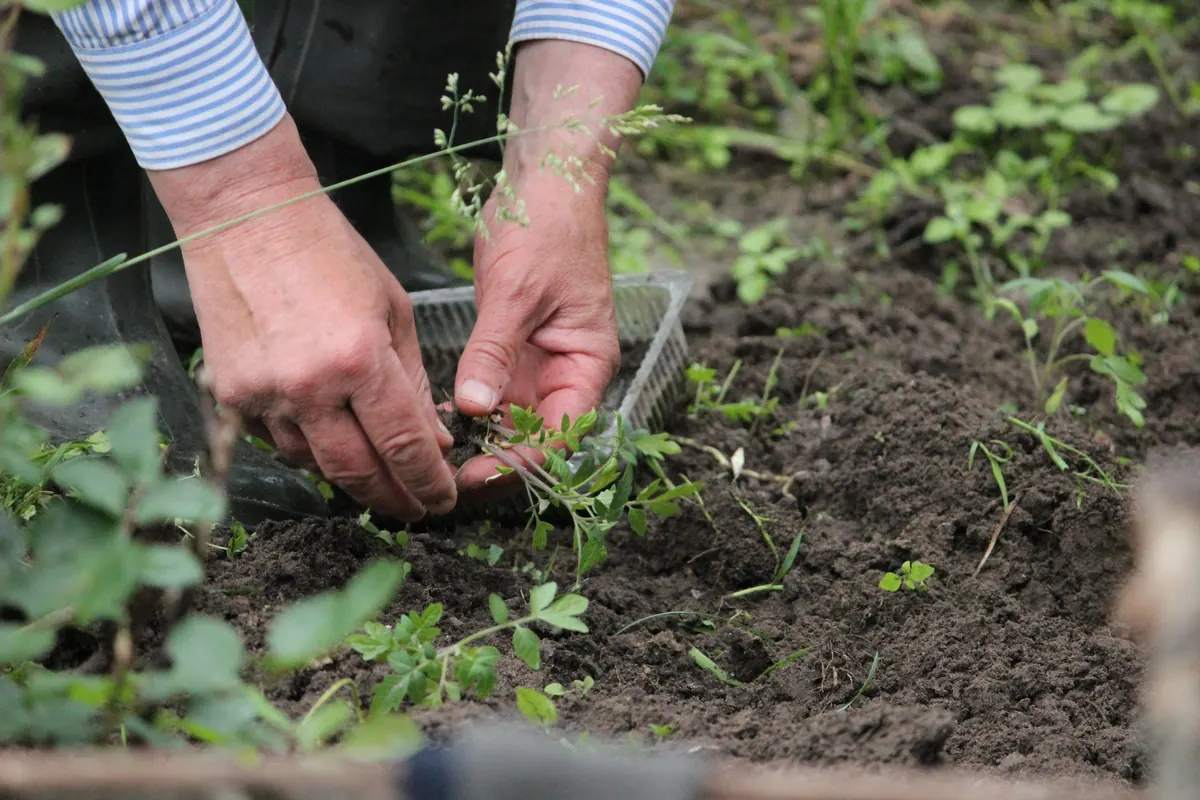
- The productive patio. Herbs by the door, a tomato in a tall pot, a blueberry in ericaceous compost. Small harvests, close to hand.
Going up: vertical planting that earns its place
Fences and walls are the largest surface in most small gardens and the least used. Trellis fixed to a fence, a simple wire grid on brick, or a few wall-mounted planters will double your growing area without taking a centimetre from the floor.
Choose plants for the aspect rather than the picture. Star jasmine, clematis and climbing roses want sun; ivy, ferns and most hydrangeas cope with shade. For something edible, espalier apples and pears trained flat against a wall are the classic answer, and climbing beans will cover a south-facing fence in a season.
Two practical points. Wall planters dry out fast, so group them together, use larger volumes where you can, and consider a drip line on a timer if there is a tap nearby. If you are fixing anything to a fence, check first whether the fence is yours — a look at the title plan or a word with the neighbour saves an awkward conversation later. Tenants and leaseholders should check their agreement before making permanent changes.
Storage that doesn't swallow the garden
A shed is often the biggest object in a small garden and the least examined. Before buying one, measure what actually needs storing: two bikes, a mower, a bag of compost and some tools is not much. Slim wall-mounted boxes, a bench with a lift-up lid, hooks on the back of a fence and a tall narrow store along a boundary will usually do the job in a fraction of the footprint.
Where you cannot hide storage, design it. A bin store built from the same timber as the fence, a water butt painted to match, or a bench that doubles as a tool chest all stop the practical stuff from looking like an afterthought.
Materials that make a small space feel bigger
Fewer materials, used consistently, always read as more space. Pick two — pale paving and warm gravel, say — and repeat them.
- Large slabs with narrow joints create fewer lines across the ground, so the eye is not stopped every 30 centimetres.
- Lighter paving bounces light around a shady plot, while a dark fence makes a bright plot feel deeper and sets off the planting.
- Gravel is inexpensive, forgiving and quick to lay over existing hard surfaces, but it needs a firm edge to stay put.
- Seed the gaps between paving with thyme or creeping chamomile if you want softness — but keep a solid route to the door.
Start with one zone and live with it
Sketch the layout on paper, mark where the sun falls at midday and where you actually sit, then build one zone properly. Put the seating in first, because that is the part you will use daily, and plant the rest in autumn or spring when the soil is warm and rain does the watering for you.
Leave a few gaps. A small garden that is completely full in its first year has nowhere left to go, and impulse buys rarely fit a plan made in advance. Give it a season, move the pots around, and let the layout settle before you commit to anything permanent.
Photo: Erik_Karits / Pixabay